2024 Large Language Model (LLM) Hackathon for Applications in Materials Science and Chemistry
2024 Large Language Model (LLM) Hackathon for Applications in Materials Science and Chemistry
I stumbled across this hackathon on large language models (LLMs) for applications in materials science and chemistry. I found it so interesting that I decided to document it. →
Areas
- Molecular and Material Property Prediction: Using LLMs to predict the chemical and physical properties of molecules and materials, with a particular strength in low-data settings and by combining structured and unstructured data.
- Molecular and Material Design: Using LLMs to generate and optimize novel molecules and materials, including peptides, metal–organic frameworks, and environmentally friendly building materials.
- Automation and Novel Interfaces: Developing natural-language interfaces and automated workflows that simplify complex scientific tasks and make advanced tools and techniques easier for researchers to use. (This one is the most fun.)
- Scientific Communication and Education: Strengthening academic communication, automating the creation of educational content, and promoting learning in materials science and chemistry.
- Research Data Management and Automation: Streamlining the processing, organization, and management of scientific data through LLM-driven tools and multimodal agents. (This one interests me the most.)
- Hypothesis Generation and Evaluation: Using LLMs to generate, evaluate, and validate scientific hypotheses, often in combination with multiple AI agents and statistical methods.
- Knowledge Extraction and Reasoning: Extracting structured information from scientific literature and performing in-depth reasoning about chemical and materials science concepts through knowledge graphs and multimodal approaches. (This one is relatively mature.)
Automated Workflows
LangSim→
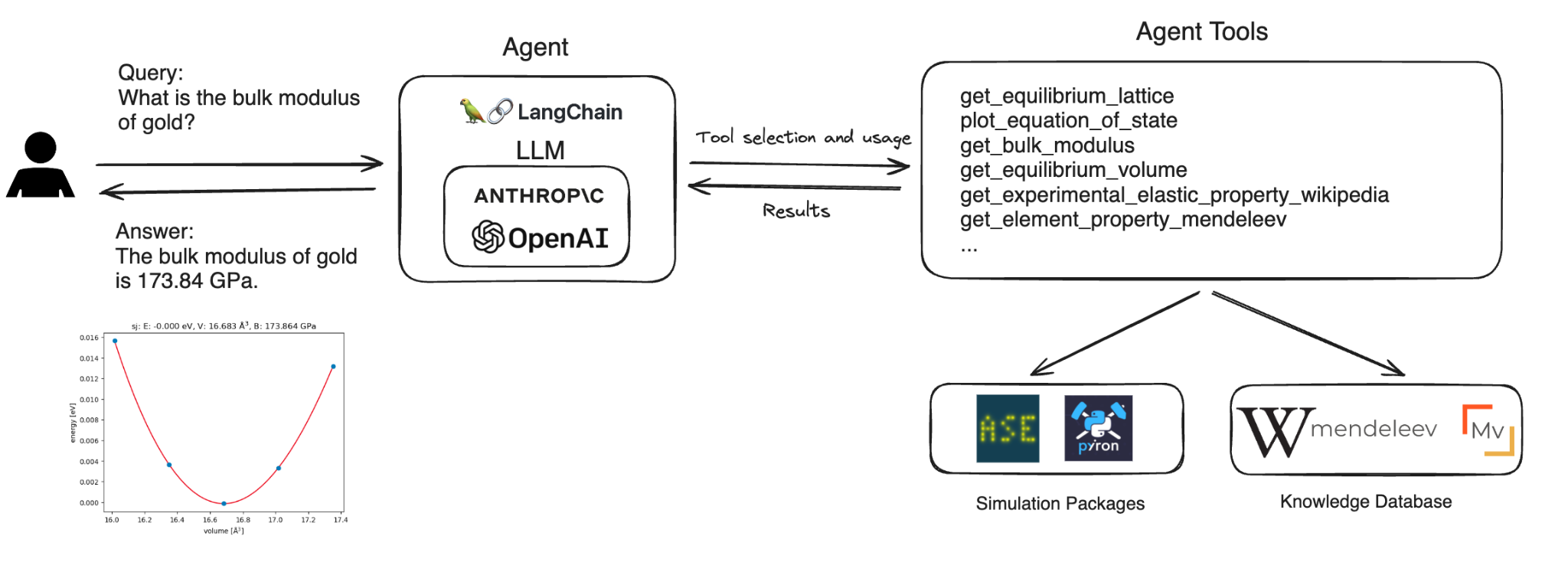
The LangSim research agent is built on the LangChain package, implementing existing simulation workflows as LangChain agents.
Although I think this software has many strengths, it is difficult for an LLM to autonomously solve many simulation problems. It feels fine for the software to compute a few simple properties,
T2Dllama: Harnessing Language Model for Density Functional Theory (DFT) Parameter Suggestion→
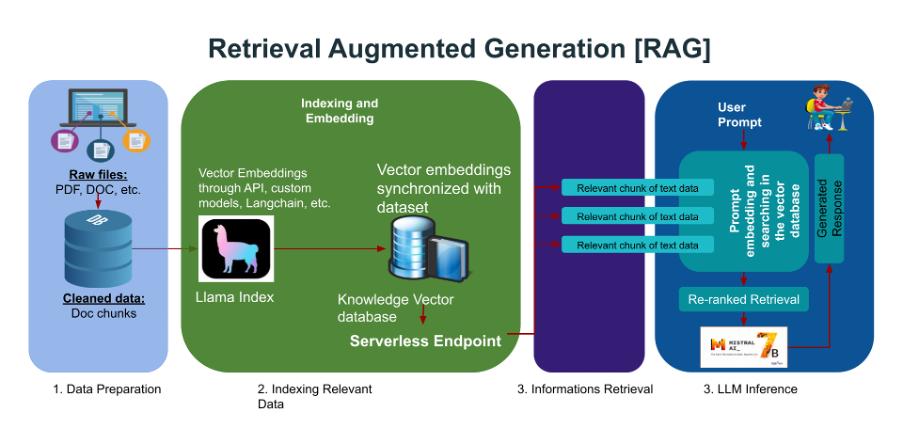
This one uses the retrieval augmented generation (RAG) technique [1], which is effectively connecting to a database (although some studies suggest that this is less effective than simply putting all the materials into a longer context).
yeLLowhaMMer: A Multi-modal Tool-calling Agent for Accelerated Research Data Management→
Using LLMs to simplify and accelerate data-processing tasks, it takes free-form text and image instructions from users and carries out various complex scientific data management tasks.
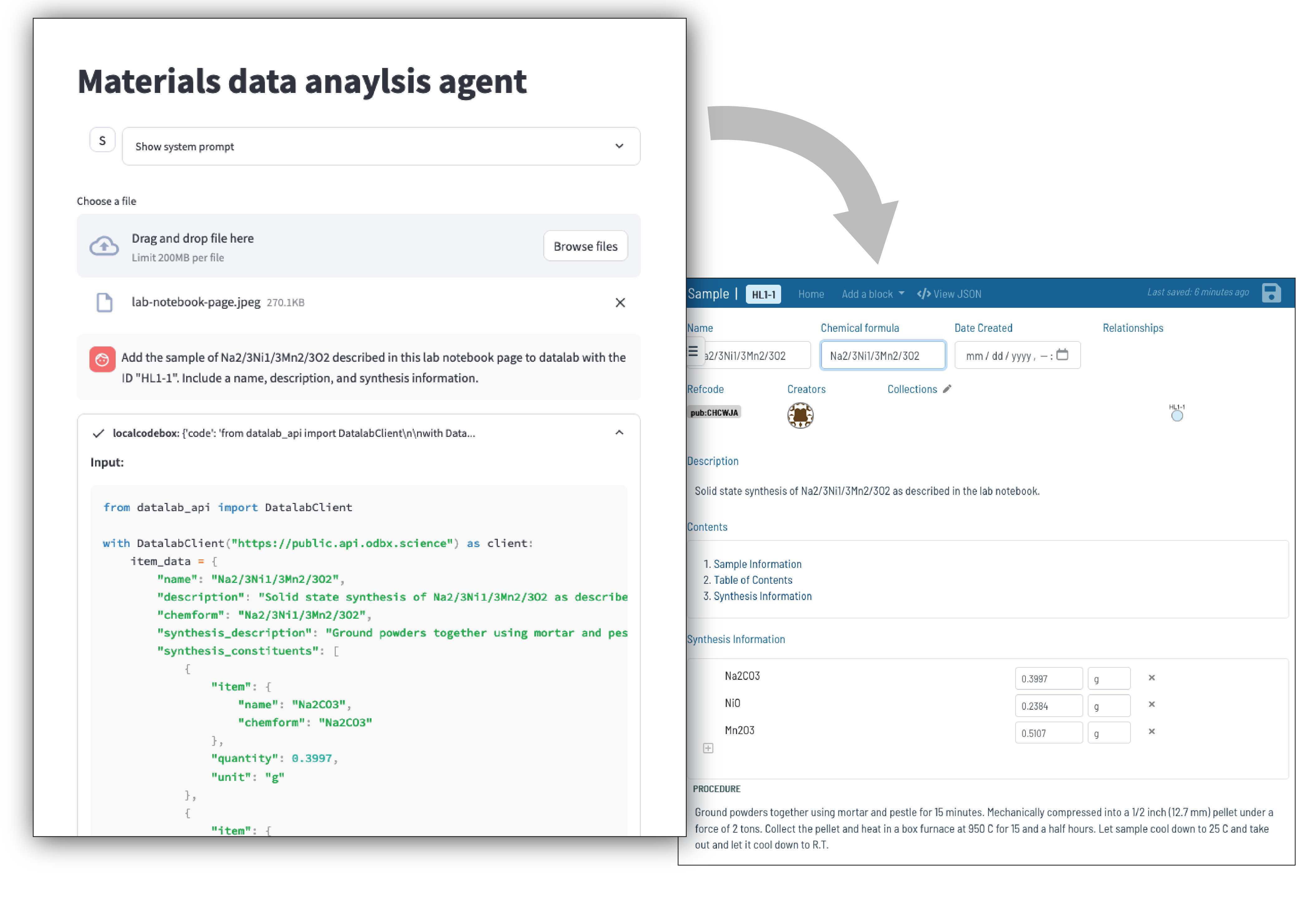
For example, instruct the agent: "Extract my 10 most recent sample entries and summarize the synthesis methods used." In this case, the agent will try to use the datalab API to write and execute Python code in order to query the user's samples in the datalab instance and write a human-readable summary. If the code it generates produces an error (or does not provide enough information), the agent can iteratively rewrite the program until the task is completed successfully.
Yunfan Gao, Yun Xiong, Xinyu Gao, Kangxiang Jia, Jinliu Pan, Yuxi Bic, Yi Dai, Jiawei Sun, Meng Wang, and Haofen Wang, “Retrieval-Augmented Generation for Large Language Models: A Survey”, https://doi.org/10.48550/arXiv.2312.10997. ↩